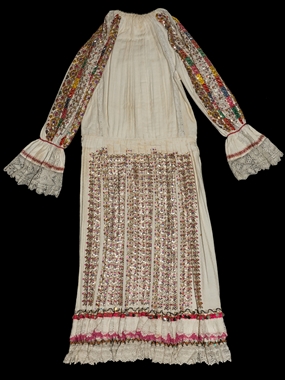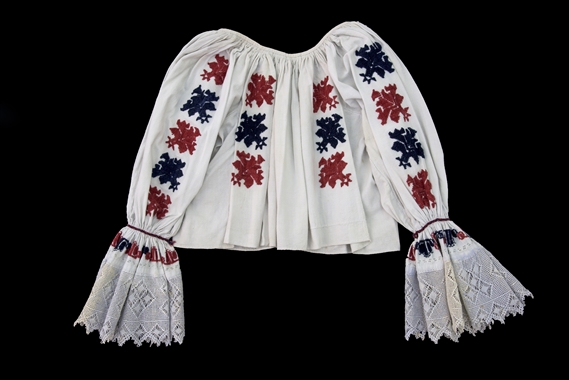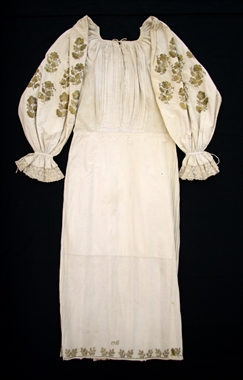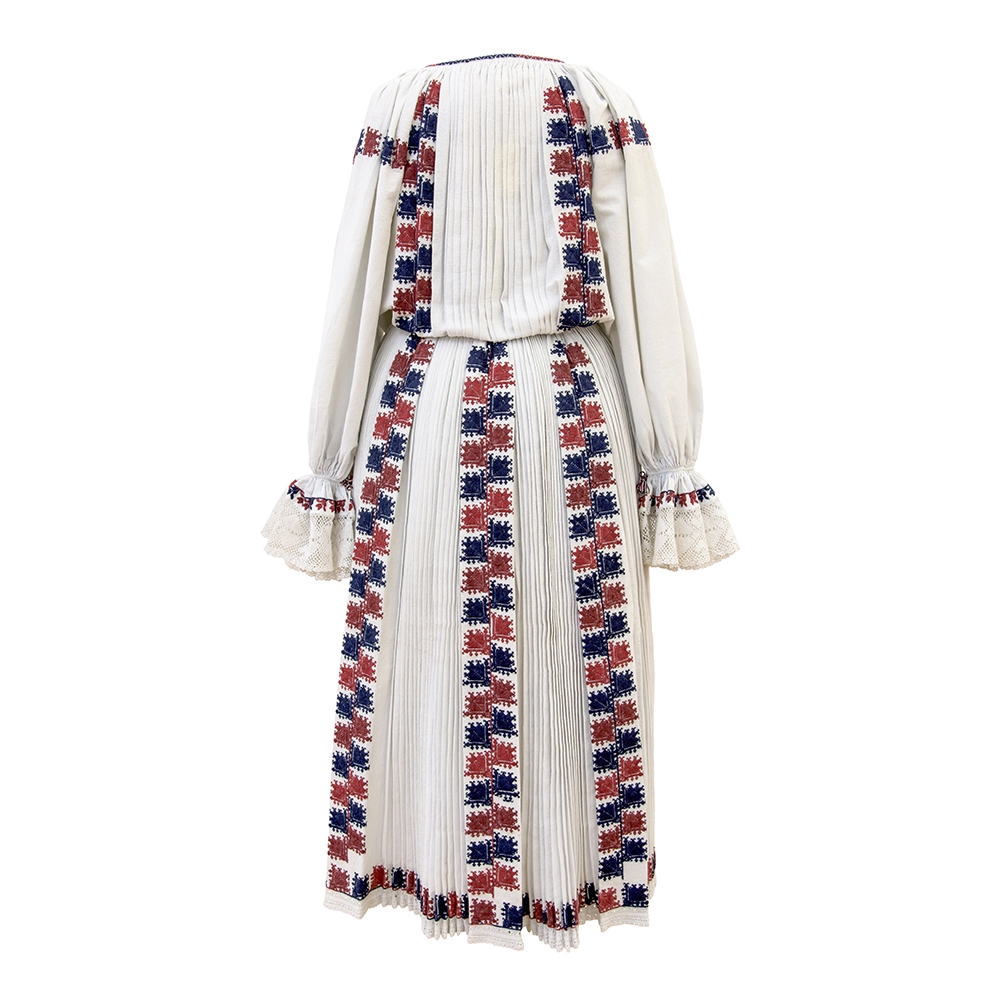
With more than 5,500 objects, the Collection brings together traditional clothes and jewelry: sets of traditional costumes, individual parts, headgear and footwear made and used in the regions of Slavonia, Western Srijem and Baranja from the end of the 18th century to the present day. The initial holdings consist of objects from initial collections replenished by collections from private collectors, and significant collection actions include the planned acquisition of objects for the permanent exhibition in 1972, and the acquisitions from war-torn areas of Slavonia and Baranja in the 1990s. The material contained relates equally to older and newer clothing - it includes working, everyday and mostly ceremonial pieces of clothing, with numerous regional, typological and stylistic versions, for which Eastern Croatia is particularly known. Along the Sava River, there are versions from Novljani, Nova Gradiška, Slavnosnki Brod, Vinkovci and Županja, with a different type of costume from the villages of the so-called Cvelferija, and then the costumes of Šokadija and Western Srijem. Local characteristics are recognizable in the costumes of the region of Podravina, the regions of Pakrac, Požega, Našice, Valpovo and Đakovo, as well as the regions of Podunavlje and Podravska Baranja. A modern research approach analyzes the changes and meanings of traditional costumes as a recognizable indicator of cultural identity, as well as their application in folklore art.
We use cookies to track visits to our pages (Google Analytics) for the purpose of improving the pages. The statistics are collected anonymously, and by accepting, you agree to the use of cookies. Find out more